The short answer
Haa is a quiet high valley in western Bhutan, about 65 km and two hours' drive from Paro over Chele La pass. Come for the twin temples Lhakhang Karpo and Lhakhang Nagpo, mountain views from Chele La, easy village walks and the Haa Panorama trail, and buckwheat dishes such as hoentay. One day works as a trip from Paro; two days lets you hike and stay in a farmhouse.
Haa only opened to foreign visitors in 2002 and is one of Bhutan's least populated dzongkhags, so it feels far less busy than Paro or Thimphu.
Top things to do
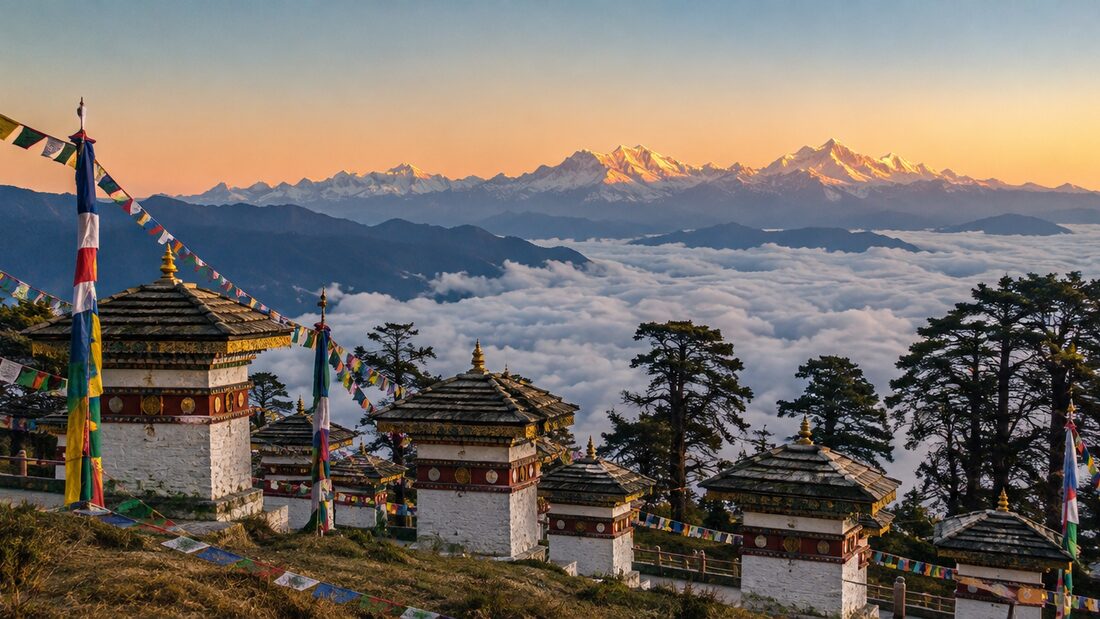
- Chele La pass: the road from Paro climbs to almost 4,000 m, one of the highest roads in Bhutan. On clear mornings you can see Jomolhari and the peaks along the Tibet border. Prayer flags cover the ridge, and short walks lead to viewpoints.
- Lhakhang Karpo (White Temple): said by tradition to date to the 7th century, with the three sacred hills known as Meri Puensum rising behind it.
- Lhakhang Nagpo (Black Temple): the White Temple's twin, a short walk away in the upper valley. Visit both with a guide to hear the legend of how they were founded.
- Haa Panorama Hiking Trail: a marked walk above the valley with wide views over the Haa Chhu, farms and forest.
- Village walks: farmhouses, potato and barley fields, and small temples are easy to reach on foot from Haa town.
- Juneydrak and Katsho area hikes: forest trails lead to small hermitages and temples above the valley. Go with a local guide; paths can be steep and slippery after rain.
- Eat local: hoentay (buckwheat dumplings filled with turnip leaves and cheese) is Haa's signature dish. Farmhouse stays often serve it with ezay and butter tea.
Festivals and when to go
- Spring (March to May) and autumn (September to November) bring the clearest skies for Chele La views.
- Summer: Haa holds a summer festival celebrating herder life, food and games, usually in July. Check the date each year.
- Rongtse Nye festivals in Sangbaykha, in the south of Haa, are listed for 19 to 21 November 2026 on the Department of Tourism's tentative festival calendar. Dates can change, so confirm before you travel.
- Winter is cold and Chele La can close for a day or two after snow. Pack warm layers in every season; Haa sits at about 2,700 m.
Getting there and costs
- From Paro: about 65 km over Chele La, roughly two hours. Most visitors go as a day trip or overnight from Paro.
- International tourists travel with a licensed tour operator and pay Bhutan's Sustainable Development Fee, currently US$100 per adult per night (US$50 for children 6 to 12) until 31 August 2027.
- Indian nationals pay a separate, lower daily fee and need a permit; Bhutanese citizens pay no fee.
- Dress modestly in temples and dzongs, remove hats, walk clockwise around chortens, and do not photograph inside shrine rooms.
Stay and support local
Haa has farmhouse homestays and small hotels in and around Haa town. Staying with a family is the best way to try hoentay and learn about valley life. If you run a homestay, guesthouse or tour business in Haa, you can list it free on Dragon so Bhutanese and visitors can find you. See our Haa page for places and services.
Questions people ask
How far is Haa from Paro?
About 65 km over Chele La pass, usually around two hours by road.
How high is Chele La?
Close to 4,000 m, one of the highest roads in Bhutan. Expect cold wind even in summer.
What is Haa famous for?
The White and Black twin temples, Chele La views, quiet farm villages and hoentay buckwheat dumplings.
Can I visit Haa as a day trip?
Yes, many visitors go from Paro and back in a day, but one night lets you hike and stay in a farmhouse.
When did Haa open to tourists?
Haa opened to foreign tourists in 2002.
Useful links
This guide is general information, not legal, migration or financial advice. Rules change, so always check the official links.